

Florida Innovative Technology Grant for Lake Virginia
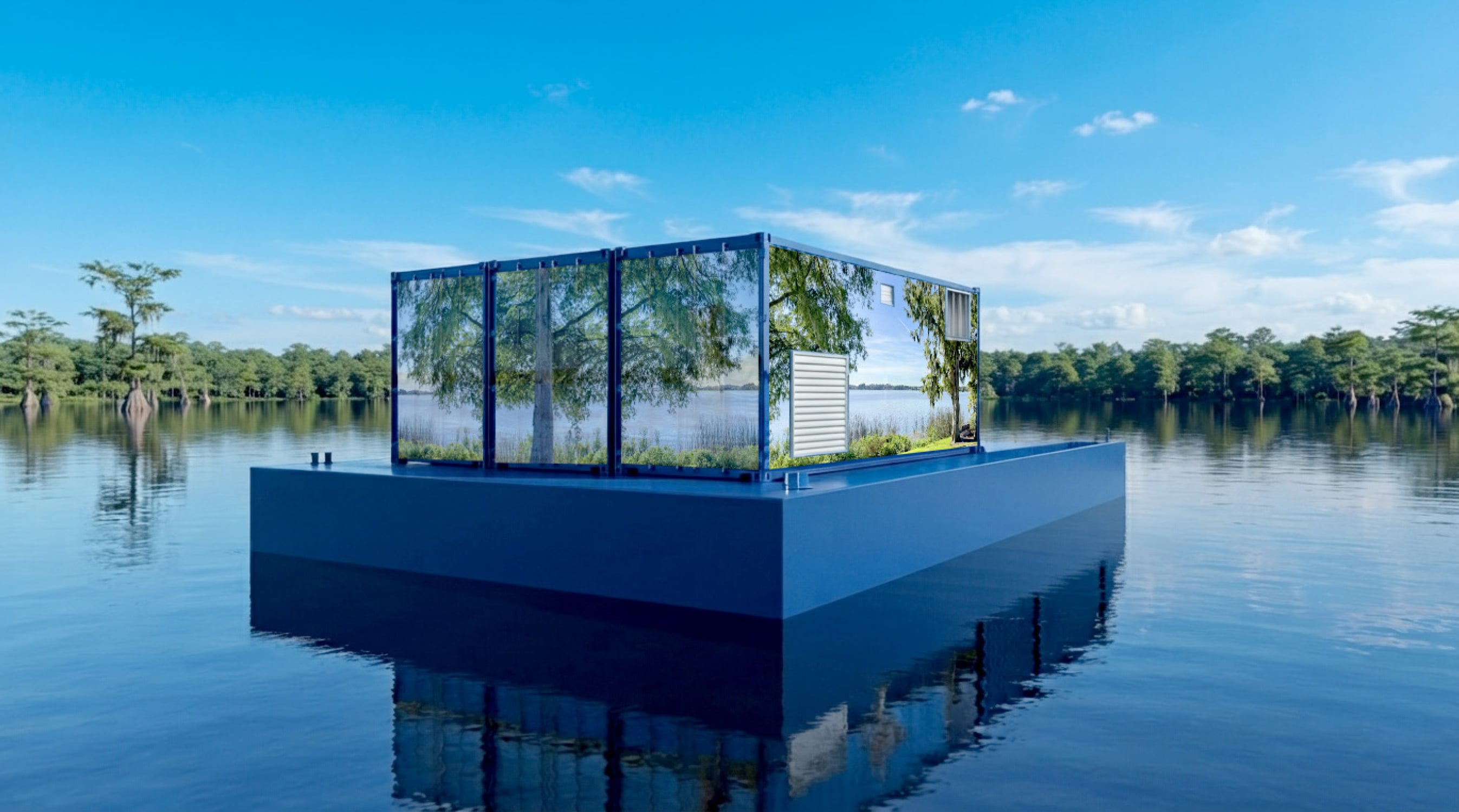
Rendering of the barge
Lake Virginia: Installation of Moleaer Nanobubble Technology
As a part of a 12-month pilot project, the City of Winter Park will deploy a large-scale nanobubble technology installation to revitalize water quality in Lake Virginia to demonstrate the technology’s efficacy for harmful algal blooms (HABs) and water quality restoration in December 2026.
Through the efforts of the Natural Resources & Sustainability Department, the City of Winter Park was awarded a $2.1 million Florida Innovative Technologies for Harmful Algal Blooms (HABs) Grant through the Florida Department of Environmental Protection (FDEP). The program supports innovative projects that prevent, mitigate or clean up harmful algal blooms, with an emphasis on nutrient reduction, as well as projects that improve algae monitoring and prediction.
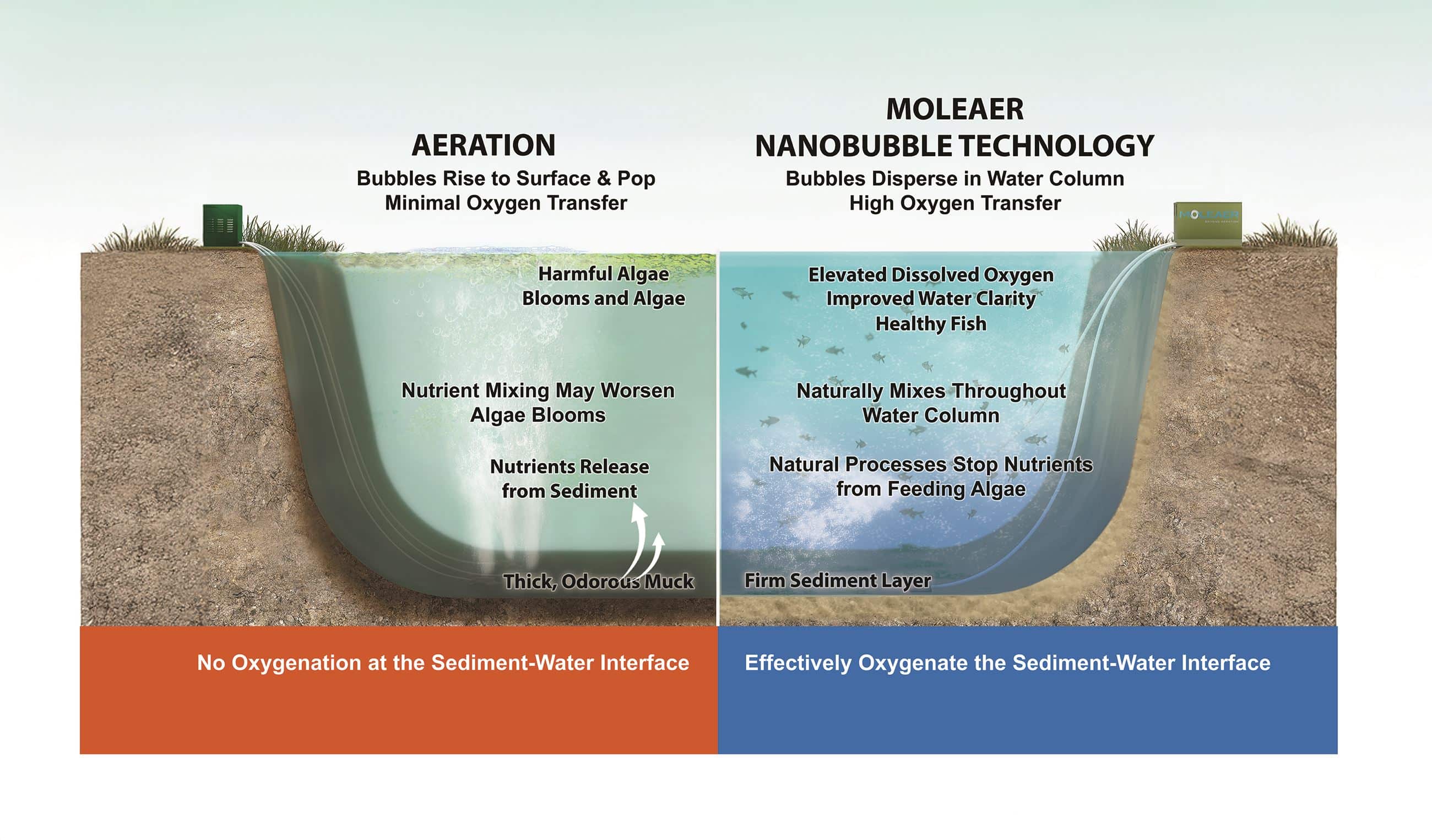
The grant will support the oxygen nanobubble treatment project in Lake Virginia for 12 months, addressing the recurring algae problem that has affected the beach at Dinky Dock and lake recreation. When bottom sediments become oxygen-depleted, phosphorus can be released into the water, providing nutrients that contribute to cyanobacteria and other algal blooms. The nanobubble system is designed to increase oxygen levels and reduce phosphorus release from the sediments, helping improve water quality and prevent future blooms.
Moleaer Nanobubble Technology
Moleaer nanobubble technology can help restore the water quality in Lake Virginia by increasing dissolved oxygen (DO) and Oxidation-Reduction Potential (ORP) levels throughout the water column, especially at the bottom, resulting in:
- The acceleration of natural, microbial decomposition (breakdown) of the thick layers of accumulated muck at the bottom of the marina, and;
- The improvement of water clarity and quality, reduction in algae growth, as well as HAB frequency and severity.
Nanobubble Technology is a chemical-free approach to restore water quality and clarity by delivering oxygen in an exceptionally efficient and stable form. Moleaer is the global leader in this field with the most widely deployed nanobubble systems operating at commercial scale across waterbodies and treatment environments worldwide.
Moleaer’s patented nanobubble generator introduces oxygen into water in two complementary ways. First, it dissolves gas at high efficiency (85% gas transfer efficiency rate) exceeding conventional aeration methods, as and validated by 3rd party testing. Second, it generates nanobubbles which are extremely small, stable gas bubbles that remain suspended in water, enabling oxygen to be distributed more evenly and persist where it’s needed most.
This process supports clearer water, reducing accumulated muck, and healthier aquatic ecosystems, reinforcing the natural biological processes that depend on oxygen.
How Moleaer nanobubble technology restores waterbodies

- Enhanced aerobic conditions & lake resilience: Moleaer nanobubble technology creates and enhances oxygen-rich conditions in lakes, especially at depth, supporting natural lake processes and improving resilience to common challenges such as algae blooms, without the use of harsh chemicals.
- Water clarity improvement: Nanobubbles reduce the frequency, severity and duration of algal blooms, break down accumulated muck, minimize foul odors and support healthier aquatic ecosystems overall.
- Efficient oxygen delivery & distribution: Nanobubbles deliver oxygen throughout the water column, including the deeper zones where oxygen depletion often occurs and traditional approaches are less effective.
- Nutrient mitigation & algae reduction: Improved oxygen conditions at depth reduce sediment nutrient release associated with low oxygen (anoxia), limiting the nutrients available to fuel excessive algal growth.
- Enhanced microbial activity & muck digestion: Enhanced oxygen conditions at the lake bottom stimulate and accelerate natural microbial processes which are key to breaking down organic muck more efficiently.
Robust water quality monitoring plan
The pilot project at Lake Virgina will consist of a robust monitoring plan to demonstrate the technology’s efficacy for water quality restoration. During the two months before installation, data collection will be conducted to set the baseline for the 12-month monitoring period to follow installation.
Routine monitoring
- Monthly grab water and sediment sample collection from three locations analyzed by a lab for 15 chemical and biological parameters.
- Vertical profiles at 0.5-meter intervals spanning the entire water column.
- BioBase® sediment hardness mapping.
Continuous water quality monitoring
- Three PME Minidot® data loggers collect hourly dissolved oxygen and water temperature data.